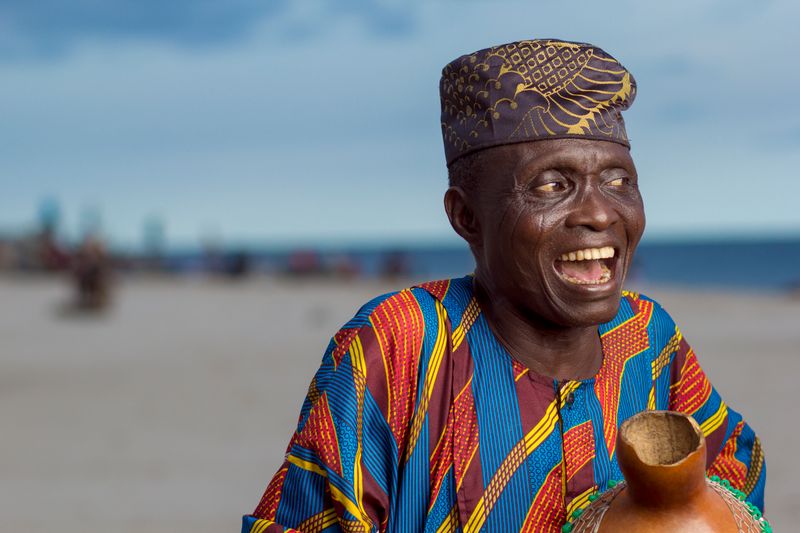
West African men hold an enormous cultural weight in the diaspora narrative. This circle is for the specifics — Mandé, Wolof, Yoruba, Akan, Igbo, Hausa, and the cross-cutting questions of who we are when we leave and who we are when we come back.
The Coast & The Sahel is for West African brothers — Nigerian, Ghanaian, Senegalese, Malian, Burkinabe, Ivorian, Cameroonian, Sierra Leonean, Liberian, Gambian, Guinean, Beninese, Togolese, Mauritanian, Cabo Verdean — and their diaspora children. West African brothers carry a particular weight in the global Black diaspora story: the continent's largest populations, the longest unbroken trade and cultural networks, and the through-line that runs through much of the African American story by way of the trans-Atlantic crossing. The room honors that weight by taking the specifics seriously.
The brothers in this circle include men born in the region who came as students, as workers, or as family joiners. There are brothers who came as children and grew up here. There are diaspora-born brothers whose parents kept the culture firmly at home. There are brothers from the larger ethnic groups — Yoruba, Igbo, Hausa, Akan, Wolof, Fulani, Mandé, Bambara, Ewe — and brothers from the smaller groups who often have to explain the specifics to brothers from anywhere else. The circle is patient with all of that.
We talk about cross-ethnic work within West African diaspora life. The marriages and friendships across Nigerian-Ghanaian lines, across Senegalese-Malian lines, across Anglophone-Francophone lines, across religion. The specifics matter. A Yoruba father raising children with an Akan mother is doing different work than a Hausa father raising children with a Wolof mother. The room respects the specifics and helps brothers find each other across them.
We talk about religion, which in West Africa is rarely a single thing. Muslim and Christian brothers from the same country, sometimes from the same family, share the room. Traditional religion is present, sometimes openly and sometimes quietly underneath another formal affiliation. The conversations about how these traditions interact in households, in extended families, and in the diaspora communities we build are honest in this room in a way they sometimes are not elsewhere.
The languages are kept here. Yoruba, Igbo, Hausa, Twi, Ga, Ewe, Wolof, Pulaar, Bambara, Mandinka, Krio, Pidgin, and a long list of others run through the threads. Brothers raising children in the diaspora share how they have kept the language — the strict home-only rule, the visits back, the supplementary schools where they exist, the WhatsApp voice notes from grandmothers that the children grew up hearing. We respect the brothers who have lost the language and want it back. We respect the brothers who decided, with reason, that the language was not a battle they could win in their household and have found other ways to keep the culture alive.
We talk about money and family across continents. The remittance work — the support of parents, siblings, cousins, the home town development project, the school fees for younger relatives — is heavy and shared. Brothers share what they have committed to, what they have negotiated down without losing relationships, and the rare clean conversations where the home family genuinely understood the diaspora financial reality before being asked. We share the spreadsheet practice that has helped many brothers keep their commitments without losing themselves.
We talk about return. Lagos, Accra, Dakar, Abidjan, Freetown, Yaoundé, and the cities in between have become serious destinations for West African diaspora brothers thinking about return. The return is not always permanent. Some brothers run hybrid lives, six months here and six months there. Some have moved back and found the move was harder than expected. Some have tried and returned to the diaspora. None of those moves is failure. They are honest reckonings with what fits.
We talk about the relationship between West African brothers and the broader Black diaspora. The African American brothers many of us live alongside. The Caribbean brothers we work with and marry into. The Afro-British and Afro-French brothers who share so much and differ in important ways. The circle reads itself as part of the larger story without losing the specifics that make us who we are.
Pinned threads include a language-preservation thread, a thread on cross-ethnic and cross-national marriages, a thread on remittance math, a thread on return — permanent, hybrid, and trial — and a thread on raising diaspora-born children in West African cultural traditions. New brothers are welcome at every age.