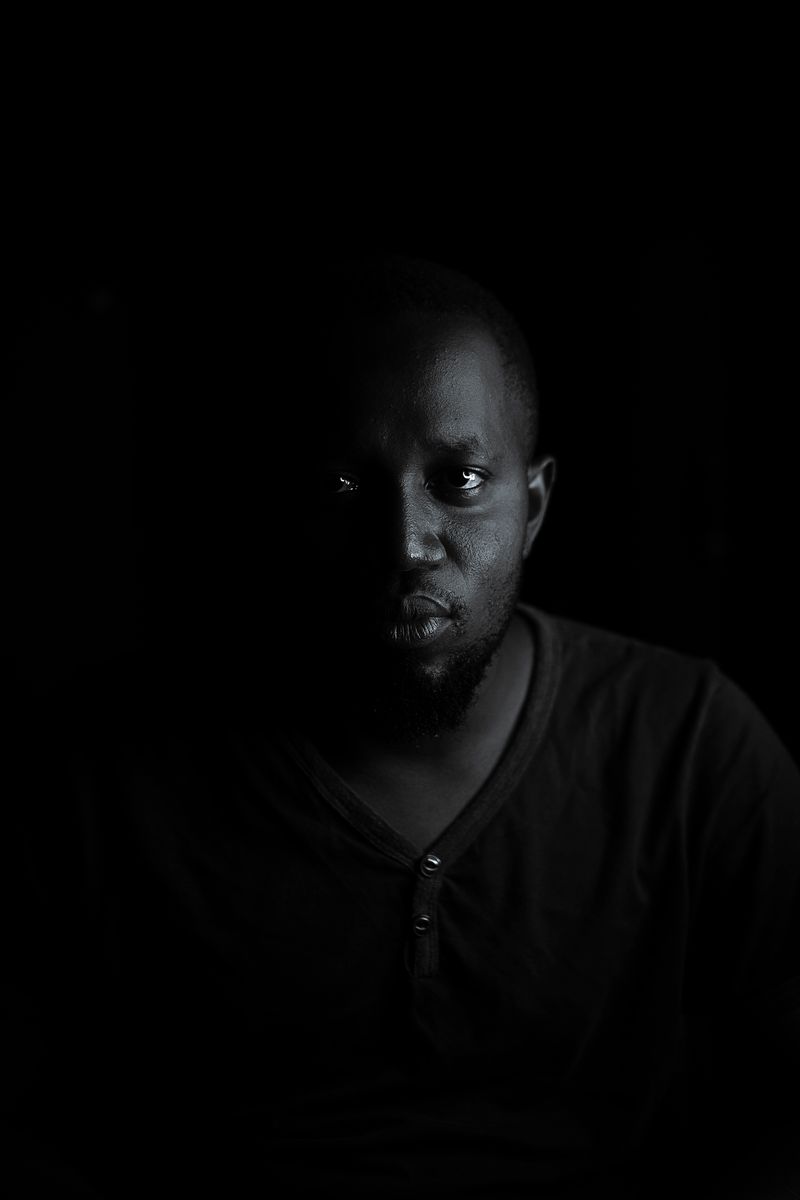
What does it mean to be African when you've never been to the continent? What does it mean to be African American when you've never felt at home in America? What does it mean to be Black British, Afro-French, Afro-Latino, Afro-Caribbean? This circle is for sorting that out together — without litmus tests and without anyone pretending the questions are simple.
Roots & Routes is the broad identity circle for the African and African-diaspora experience. It is the room for the questions that do not fit neatly inside a single region. What does it mean to be African in a country that calls you Black? What does it mean to be Black in a country that calls you African? What does it mean to be both, neither, both-and-something-else? The questions are not academic. They show up in dating, in family, in work, in the way we move through the world.
The brothers in this room are from across the diaspora. First-generation African immigrants in the U.S., Canada, the U.K., France, Germany, and elsewhere. Their American-born children, who often hold a more complicated identity than their parents do. African Americans who have done the ancestry research and traced their roots back to a specific country or region. African Americans who have not, by choice or by the limitations of the historical record. Afro-Caribbean brothers in the U.K., the U.S., Canada. Afro-Latino brothers from the Dominican Republic, Colombia, Brazil, Honduras, Panama. Afro-European brothers in their second and third generations. Brothers on the continent who left and came back. Brothers who never left.
We talk about the specifics of cross-diaspora encounter. The American moment when a first-generation Nigerian father meets the parents of his African American daughter-in-law and the dinner conversation goes everywhere except where everyone is actually thinking. The London moment when a third-generation Caribbean brother and a first-generation Ghanaian brother find common cause and uncommon disagreement. The Brooklyn moment when an Afro-Latino brother in a Dominican family learns to navigate Black and Latino institutions that both claim him and neither fully holds him. These are not hypotheticals. They are the daily texture of brothers in this room.
We do not run litmus tests. We do not require any brother to prove his Africanness, his Blackness, his diaspora bona fides. The questions of identity are private work, the kind of work that is shaped over decades, and the room respects the brother who is still working them out as much as the brother who has arrived at a stable answer.
We talk about language. Many brothers in this room are negotiating relationships with languages they did not learn as children — the Yoruba, the Twi, the Wolof, the Amharic, the Swahili, the Patois, the Spanish, the French, the Portuguese — and the loss of those languages, when they are lost, sits at the heart of a particular kind of diaspora grief. Some brothers in this room are doing the slow work of learning their parents' or grandparents' language as adults. The room supports that work.
We talk about return. Many brothers in this room have visited an ancestral country, sometimes for the first time as adults. The experience is rarely simple. The brother who returns to Ghana and is called 'obroni' by children in the village. The brother who returns to a Caribbean island his grandparents left and finds himself a stranger in the town his name comes from. The brother who returns to Ethiopia after thirty years away and learns that the country has continued without him, as it should have. These experiences need talking through, and the room is where many brothers do it.
We talk about colorism, which is an internal-diaspora conversation we owe ourselves. The lighter-skinned brother who has been read as Latino or Middle Eastern. The darker-skinned brother who has been told he is too dark for the dating market in his own community. The way colorism shows up in our families of origin, in our professional lives, and in our own preferences if we are honest about them. The conversation is hard. It is more honest in this room than it tends to be elsewhere.
A consistent theme is the move from question to question. Brothers come into the room asking 'where do I belong?' and over time, with the room's company, the question becomes 'what am I going to build, with the materials I actually have?' That move is not a solution. It is a shift, and the shift is what most brothers say they came for.
Pinned threads include a thread on cross-diaspora encounter, a thread on language reclamation, a thread on return trips and what to expect, a thread on colorism within our communities, a thread for brothers in mixed-heritage families, and a thread for brothers whose identity is complicated by adoption, migration, or both. New brothers are welcome to read first and post when they are ready.