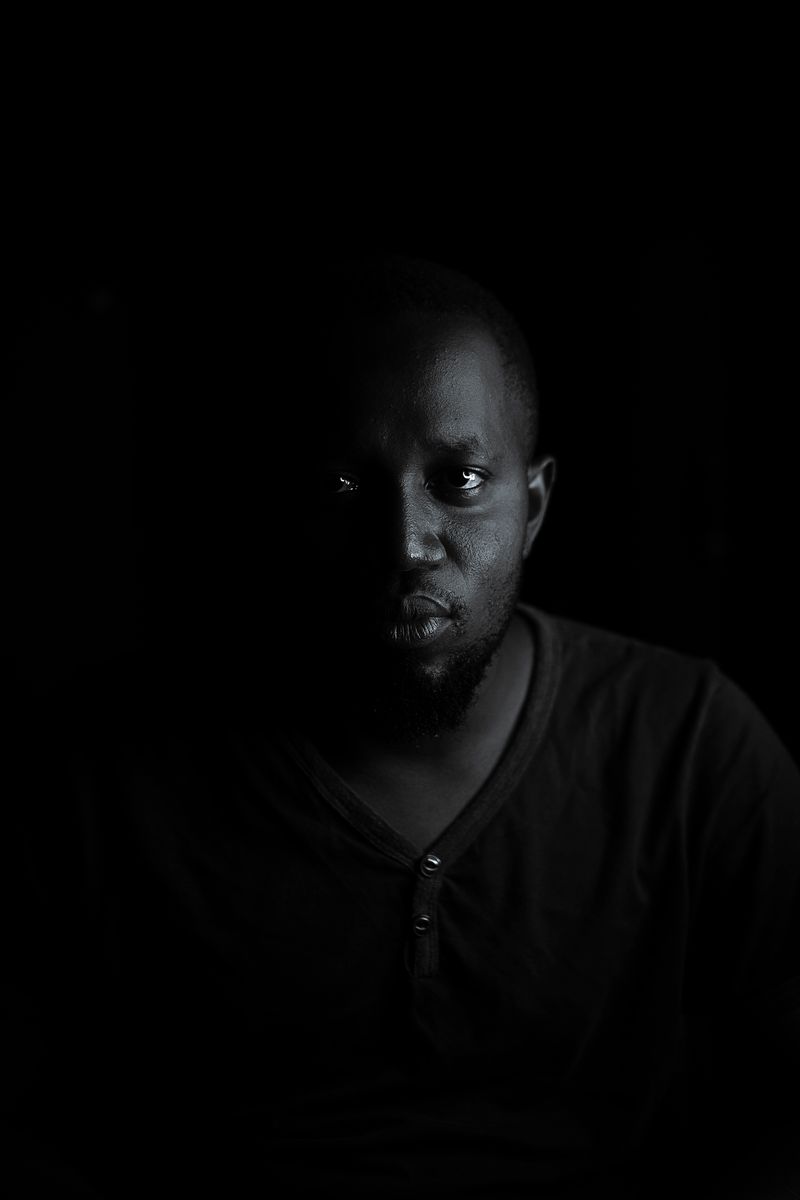
Tre'Vell Brooks
Grief counseling for Black men — recent and old loss
I am a licensed counselor in Houston specializing in men's grief. My own father died when I was twelve. I sat in rooms full of grieving Black men for ten years before I trained to run them. The work is patient, structured, and honest about how loss reshapes a man's whole life.
Eight-session arcs. First call is free. Sliding-scale spots open monthly.
I am a licensed counselor in Houston specializing in men's grief. My father died when I was twelve. I sat in waiting rooms for a year after his death with my mother, who was trying to find someone in our small Texas town who would take us as clients. The counselors she could find were not for us. Some were kind. Some were trained. None had the specific framework for what a Black boy whose father had just died was carrying. I am, in some ways, the counselor I needed at twelve. I have built my practice around that absence.
I work with Black men in grief. The losses span the spectrum. Parents, siblings, spouses, children, friends, mentors, the community elders whose deaths felt like personal losses. I work with brothers in the first ninety days of a loss and brothers who are twenty years out and have only recently come to a place where the grief can be sat with rather than endured around. The work is different in each phase of grief, and I have built skill in each.
My clinical approach is grounded in the contemporary research on grief, including the move away from the stages-of-grief framework that has been popularized and was never quite what the original research supported. The current best understanding is that grief is not a linear process moving through defined stages but a complex, oscillating engagement with the loss that takes shape over years. Some brothers do most of the work of grief in the first year. Some do not begin the work seriously until years after. There is no schedule. My work is to meet you where you are.
The specific work I do with Black men is the work that takes the cultural context into account without treating it as the whole story. Many of the brothers I work with were raised in households where grief was managed by men through silence, work, and the appropriate stoicism in front of family. There is real strength in those traditions. There are also real costs, particularly when the grief is held underground for so long that it shapes a brother's life without his knowing what is shaping it. I help brothers find the language for what they are carrying, in ways that respect the tradition they came up in.
I work in arcs of twelve to twenty-four sessions for most brothers, with the understanding that some patients need longer engagement and some need only a few sessions to consolidate work they have already done on their own. My approach uses talk therapy primarily, with elements of writing-based therapy that I have found especially useful for men. The brothers who do the writing exercises consistently tend to do the deepest work in our sessions; the writing surfaces what the conversation cannot always reach.
My rate is one hundred and ten dollars per hour. I take some insurance directly and provide superbills for out-of-network reimbursement. I keep a small sliding-scale list for patients who would otherwise not be able to afford care. I see clients in person in Houston and via video for clients elsewhere in Texas and other states where I hold licensure.
I will refer out for what is not in my scope. Severe mental-health conditions, active suicidality requiring crisis-level care, severe substance use co-occurring with grief — for these I will refer to colleagues with the specialized training. I will stay involved when that makes sense.
If you are considering this work, write to me about the loss and what you are looking for. There is no right way to grieve. There is also no requirement that you grieve alone. The brothers I have worked with longest are the brothers who showed up willing to sit with what they had been avoiding. That is the work. I will be here.
Sign in to send Tre'Vell Brooks a virtual gift.
How a session works
What to expect when you book Tre'Vell Brooks.
1. Intro call
The first conversation is short and free. You describe your situation in your own words. Tre'Vell Brooks listens, asks a few clarifying questions, and decides honestly whether this is the right working relationship for what you are trying to do. Not every brother ends up being the right match for every mentor; the intro call exists so the decision is mutual and clear before any commitment.
2. Working sessions
Most ongoing engagements run on a biweekly or monthly cadence. Each session is roughly an hour. There is usually a piece of homework between sessions — a writing exercise, a conversation you have committed to having, a small decision you are sitting with. The work happens in the space between calls as much as in the calls themselves. The platform commission of 15 percent on paid sessions covers hosting, support, and the editorial vetting that keeps the mentor roster honest.
3. Long-arc relationship
The brothers who have worked with mentors on this platform longest are the brothers who treated the relationship as a long arc rather than a single transaction. The first three months are where the patterns get named. The next nine months are where the patterns start to shift. The years after that are where the relationship becomes something more like the long mentor relationships our elders had, which were rarely about a single career move and almost always about the slow shaping of a life.
Related circles
Brotherhood rooms in Mental Health and African American.
If Tre'Vell Brooks's scope overlaps with what you are working on, you may also benefit from the brotherhood circles in the same topic area or diaspora region. The circles are free to join with an account; the conversation happens between brothers rather than between a single mentor and a single client. Many of the brothers who eventually book Tre'Vell Brooks arrive after months of reading and posting in the circles below.
The Inside Work
Therapy, depression, grief — without the macho silence.
The Heavy Days
Anxiety, depression, and the slow climb back.
First-Generation American
Born in America to African parents. Both, always.
Single Dads, Full Hands
Sole custody, primary parent, weekends-only — all of us.
Other mentors in Mental Health
Different price points and approaches.
Mentorship fit is specific. The right mentor for one brother is the wrong mentor for another, even when the topic area is the same. The brothers below all work in Mental Health but bring different backgrounds, regions, price points, and approaches. Read their full pages before you decide. The intro calls are free for a reason.
Dr. Earl Ellis
20 yrs · African American · $180/hr
Psychology for Black men — anxiety, depression, midlife
Brother Lawrence Hayes
14 yrs · African American · Free
Peer recovery — alcohol, opioids, gambling, porn
Tunde Adebayo
12 yrs · Afro-European · $105/hr
Mental health for African men — depression, grief, identity