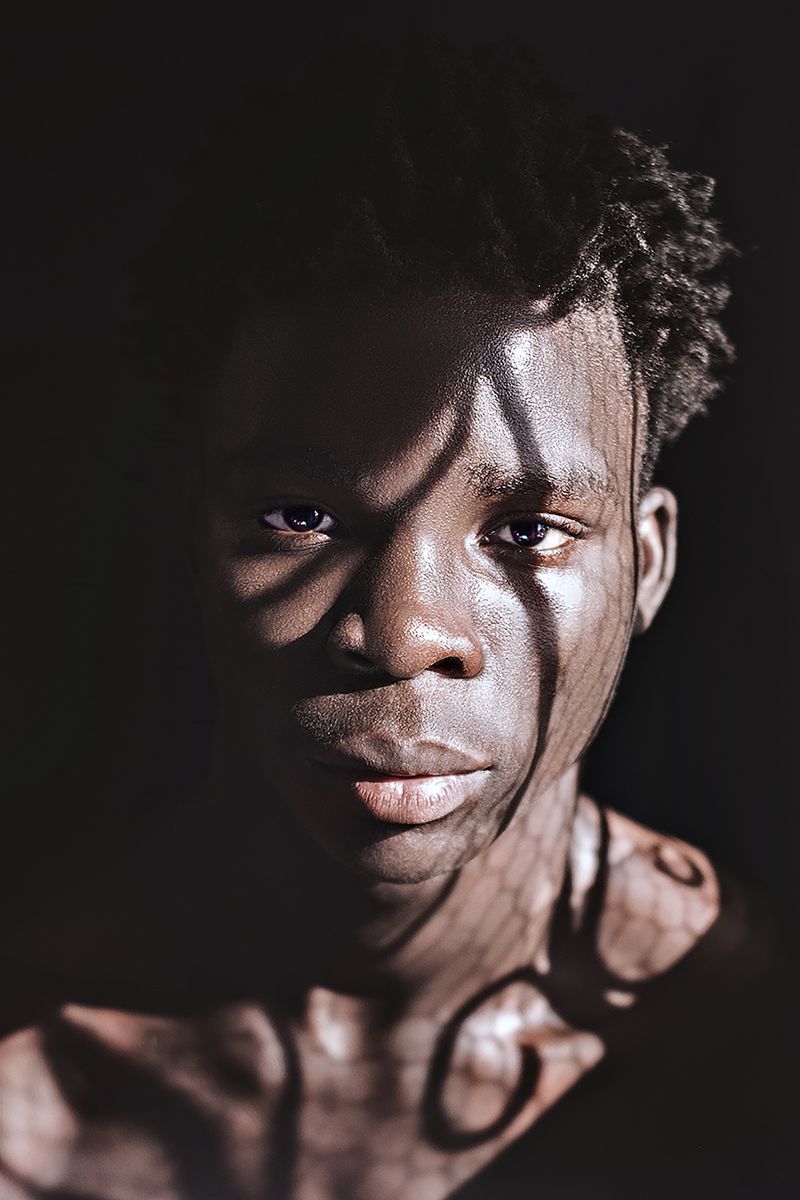
Dr. Earl Ellis
Psychology for Black men — anxiety, depression, midlife
I am a licensed psychologist with twenty years of practice working primarily with Black men. My work is talk-based, evidence-grounded, and culturally specific. CBT and ACT form the spine of the work, but the conversation is always shaped by what it means to be a Black man in this country right now.
I take a small number of new patients per quarter. Free fifteen-minute consult. Sliding-scale available.
I am a licensed psychologist with twenty years of clinical practice working primarily with Black men. My training is in cognitive-behavioral therapy, with additional training in interpersonal therapy and the psychodynamic tradition. I hold a Ph.D. in clinical psychology. My practice is in Washington, D.C., and I see clients in person at my consulting room and via video for clients in other parts of the U.S.
I came to this work the long way around. I trained at a university psychology program in the early 2000s in a cohort where I was the only Black male graduate student. The training was strong but did not prepare me for the specific work I would do once I started seeing patients. The clinical literature was not, at the time, particularly attuned to the experience of Black men in the United States. I spent the first decade of my practice catching up on what graduate school did not teach me, and continuing to learn from the men who trusted me enough to do the work with me.
My clinical focus is on adult men with depression, anxiety, complicated grief, identity issues, and the broader category of midlife reckoning. I am especially attuned to the way these conditions present in Black men. The depressed Black man often does not describe himself as depressed; he describes himself as tired, irritable, disconnected, going through the motions. The anxious Black man often presents with somatic complaints before he presents with the cognitive content of his anxiety. The grieving Black man often does not have a vocabulary for grief and presents with anger or withdrawal long after a loss that family members may have long since stopped acknowledging. I have learned to listen for these presentations and to work with them in ways that respect how Black men actually experience their own distress.
My approach is structured and time-limited where possible. I work in arcs of twelve to twenty sessions for most of my clinical work, with the understanding that some patients need longer engagement and that others come back for additional work years after the initial arc closes. The work tends to involve specific homework — thought records, behavioral experiments, communication practice, mindfulness exercises, occasional structured writing. I am not the right therapist for patients looking for unstructured supportive psychotherapy; for that work I will refer to colleagues in town who specialize in it.
My rates are at the senior end of the local market. I do not take insurance directly; I provide superbills that most patients can submit to their insurance for out-of-network reimbursement. I keep a small sliding-scale list for patients who would otherwise not be able to afford care; the list is reviewed quarterly and is often full. For patients seeking lower-cost care, I maintain a list of colleagues in town who take insurance directly and have specific expertise in working with Black men.
I will refer out for what I cannot help. Active psychosis, severe substance-use disorders, active eating disorders requiring specialized treatment, and personality-disorder presentations requiring dialectical behavior therapy are outside my scope. I have referral relationships with clinicians in the D.C. area who specialize in those areas.
If you are considering reaching out, the first useful step is to write me a brief note about what you are experiencing and what you are looking for. I read every note. I respond within a week, usually sooner. If we are a match for the clinical work, we set up a no-fee fifteen-minute consultation call. If we are not a match, I will tell you and I will help you find a clinician who is. There is no failure in not being a match; clinical fit is part of how this work goes well.
Sign in to send Dr. Earl Ellis a virtual gift.
How a session works
What to expect when you book Dr. Earl Ellis.
1. Intro call
The first conversation is short and free. You describe your situation in your own words. Dr. Earl Ellis listens, asks a few clarifying questions, and decides honestly whether this is the right working relationship for what you are trying to do. Not every brother ends up being the right match for every mentor; the intro call exists so the decision is mutual and clear before any commitment.
2. Working sessions
Most ongoing engagements run on a biweekly or monthly cadence. Each session is roughly an hour. There is usually a piece of homework between sessions — a writing exercise, a conversation you have committed to having, a small decision you are sitting with. The work happens in the space between calls as much as in the calls themselves. The platform commission of 15 percent on paid sessions covers hosting, support, and the editorial vetting that keeps the mentor roster honest.
3. Long-arc relationship
The brothers who have worked with mentors on this platform longest are the brothers who treated the relationship as a long arc rather than a single transaction. The first three months are where the patterns get named. The next nine months are where the patterns start to shift. The years after that are where the relationship becomes something more like the long mentor relationships our elders had, which were rarely about a single career move and almost always about the slow shaping of a life.
Related circles
Brotherhood rooms in Mental Health and African American.
If Dr. Earl Ellis's scope overlaps with what you are working on, you may also benefit from the brotherhood circles in the same topic area or diaspora region. The circles are free to join with an account; the conversation happens between brothers rather than between a single mentor and a single client. Many of the brothers who eventually book Dr. Earl Ellis arrive after months of reading and posting in the circles below.
The Inside Work
Therapy, depression, grief — without the macho silence.
The Heavy Days
Anxiety, depression, and the slow climb back.
First-Generation American
Born in America to African parents. Both, always.
Single Dads, Full Hands
Sole custody, primary parent, weekends-only — all of us.
Other mentors in Mental Health
Different price points and approaches.
Mentorship fit is specific. The right mentor for one brother is the wrong mentor for another, even when the topic area is the same. The brothers below all work in Mental Health but bring different backgrounds, regions, price points, and approaches. Read their full pages before you decide. The intro calls are free for a reason.
Brother Lawrence Hayes
14 yrs · African American · Free
Peer recovery — alcohol, opioids, gambling, porn
Tunde Adebayo
12 yrs · Afro-European · $105/hr
Mental health for African men — depression, grief, identity
Tre'Vell Brooks
10 yrs · African American · $115/hr
Grief counseling for Black men — recent and old loss