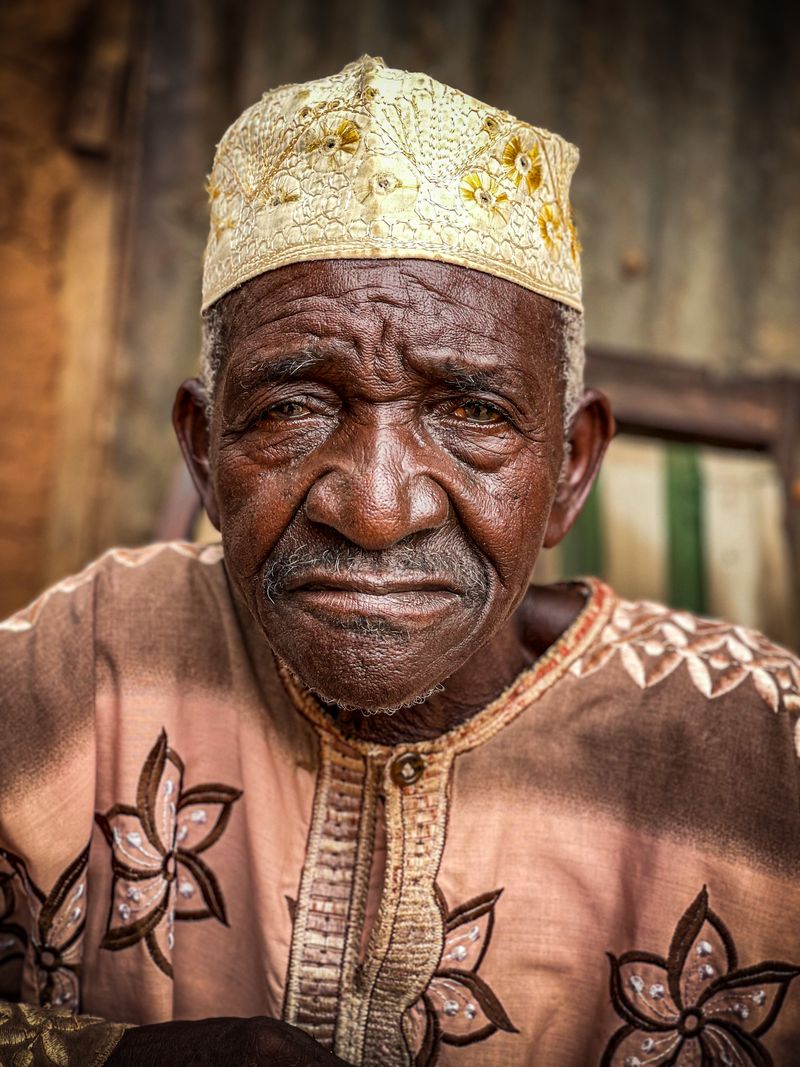
African spiritual traditions are not a footnote to colonial religion — they are the soil all of it grew on. This circle welcomes brothers from every path: Christian, Muslim, traditional African religions, mixed, doubting, deconstructing. What we share: the willingness to take spiritual life seriously without weaponizing it against each other.
Sacred Ground is the room for the brothers who want to take spiritual life seriously without weaponizing it against each other. We come from every tradition that runs through the African and African-diaspora story. Christianity in its many shapes — Pentecostal, Baptist, AME, Catholic, Orthodox, non-denominational. Islam in its many shapes — Sunni, Shia, Sufi, the various movements that took root in African American communities through the twentieth century. African traditional religions, sometimes practiced openly and sometimes carried quietly underneath another formal affiliation. Brothers raised in one tradition and now practicing another. Brothers raised in two traditions and still negotiating both. Brothers raised in none. Brothers in active doubt. Brothers in the slow rebuilding after a deconstruction. All of them welcome.
The rule of the room is honesty without contempt. We do not allow brothers to denigrate another brother's tradition. That is not because we are uncritical; it is because the work of taking faith seriously requires more humility than most public conversation can muster. If you have a critique of how a particular institution within your own tradition has failed, bring it. If you have a critique of another tradition you did not grow up inside, bring it as a question rather than as a sentence.
We talk about scripture across traditions. The brothers who engage with the Bible most seriously bring close-reading practices to the threads. The brothers who engage with the Qur'an most seriously do the same. The brothers practicing Yoruba, Vodou, Ifá, Kemetic, or other traditional African frameworks share with the same care. We learn from each other. Brothers who are deconstructing read alongside us and ask questions that often sharpen the conversation.
We talk about the ways our traditions have failed us. The pastor who preached prosperity to a congregation barely making rent. The mosque that demanded labor from members while the leadership grew rich. The traditional priest who exploited a family in crisis. The Catholic abuse history. The Pentecostal toxic-masculinity scripts. The way many of our traditions have handled queer brothers, women's leadership, mental health, and the realities of modern diaspora life. We do not pretend any of this is fine. We also do not pretend it negates the whole of the traditions in which we found God.
A consistent theme is the question of inheritance. Many brothers in this circle were raised in a faith they no longer hold and feel a complicated obligation to their parents and elders about it. Many were raised in no faith and feel drawn to one for the first time as adults. Many are negotiating a mixed-faith household — a Christian raising children with a Muslim partner, a traditional practitioner married to a Catholic, an agnostic raising children whose grandparents expect a particular religious upbringing. The circle helps brothers think through these questions without judgment.
We talk about prayer and practice as actual disciplines. What it means to keep daily prayer through a demanding work life. How to fast through Ramadan when your job does not accommodate it. How to keep a contemplative practice as a parent of young children. How to find time for the rites that matter when your week is already overcommitted. Brothers who have built sustainable practices share the specifics — what fell away, what stuck, what changed when they had kids, what changed when their parents died.
The doubt threads are quietly some of the most useful threads in the platform. Brothers who are losing a faith they were raised in, or who have lost it and are unsure what comes next, find space here that they cannot find in their home community. We do not push them in any direction. We do hold the question seriously.
We also talk about the role of community. Faith in the diaspora is often community work as much as individual work. The brothers in this circle who are most rooted describe specific community structures — small groups, study circles, prayer partners, religious mentors, extended-family observances — that hold them. Brothers without community structures of their own ask how to build them. The room shares what has worked.
Pinned threads include a thread on prayer practices, a thread on raising children of faith in a secular country, a thread for brothers in mixed-faith marriages, a thread for brothers in active deconstruction, a thread on African traditional religion as practiced today, and a thread on the books across traditions that brothers in the room have found most useful. Read what is useful. Post when you are ready. The room is patient.